
Working Controller Garments
All of this controller modifying got us thinking of ways to make controllers sexier! And far more awkward. We’ve been tossing around the idea of making some working NES controller garments to go along with our giant ones. It’s also a great excuse to learn about and use e-textiles and soft circuits.
The immediate goal is to perhaps make a controller bra and jockstrap! But we’re still figuring it all out.
Halloween Audio/Video Window Projection 2012
5-Foot NES Controller Progress – More Holes Cut!
We’ve cut more of the button holes and figured out more of the inner-workings of the NES controller project! Here’s some progress shots:
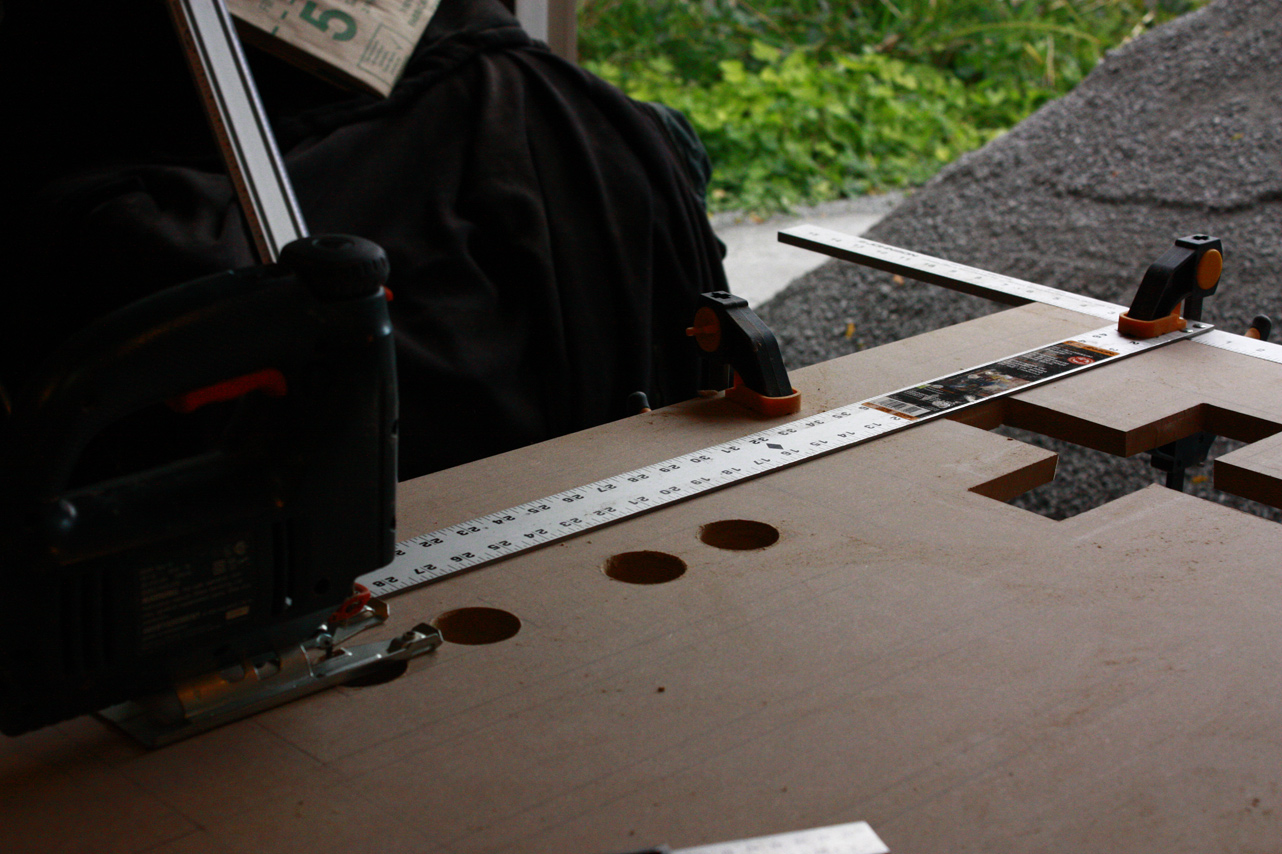
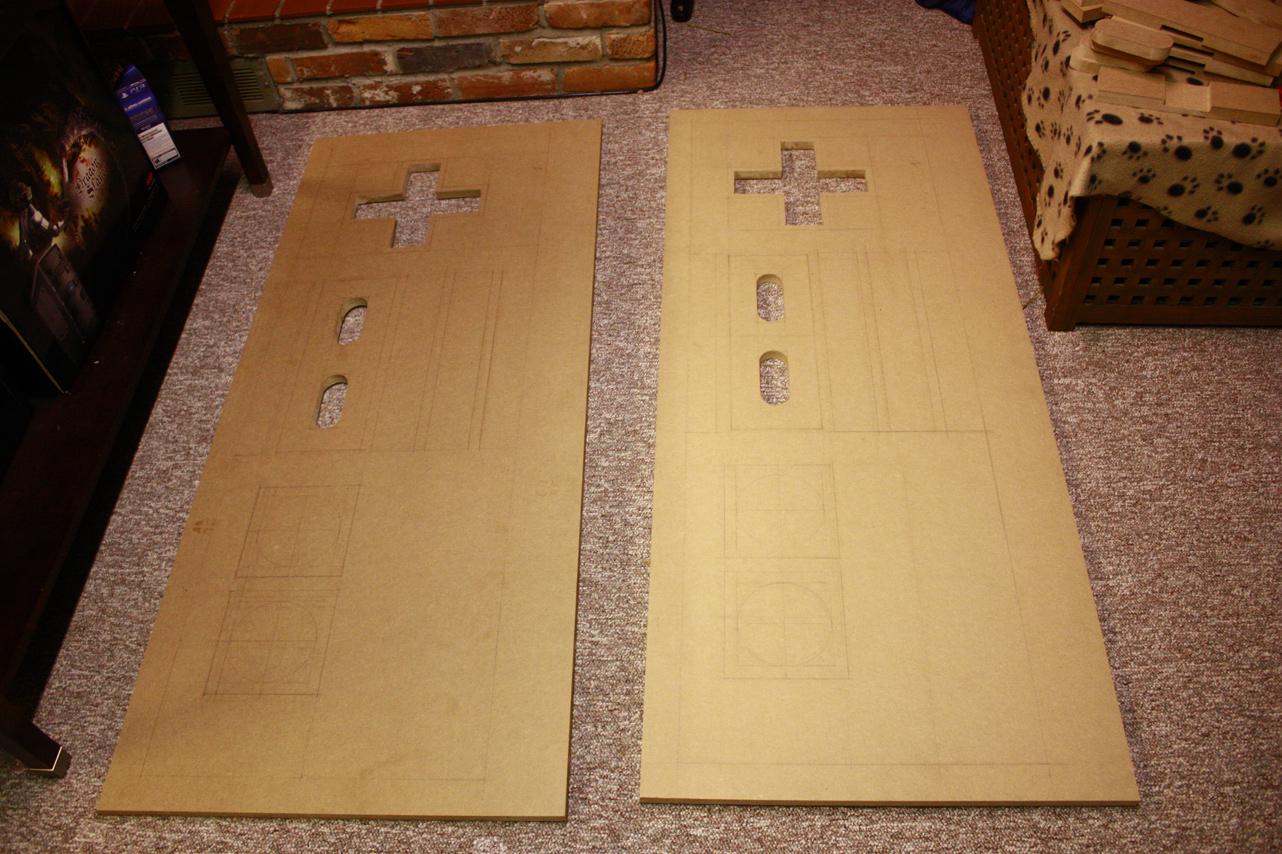
And here’s us climbing in and out of frames!:

5-Foot NES Controller Progress
So we’ve been moving along on our two giant NES controllers. We’re making them mostly out of huge pieces of MDF.
We scaled up the original controllers and drew out all our measurements:
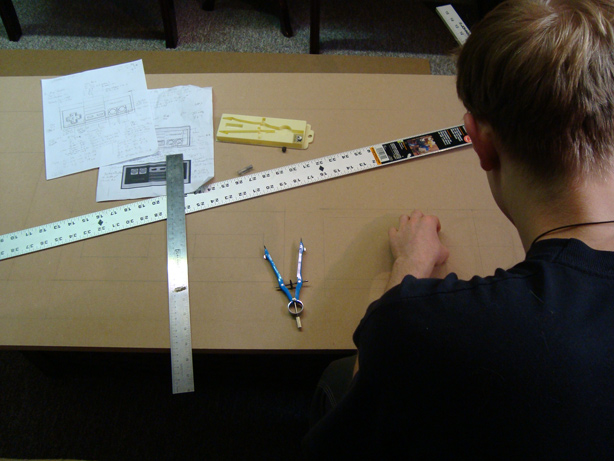
Cut out and filed some holes:

Made a D-pad frame from thinner MDF:
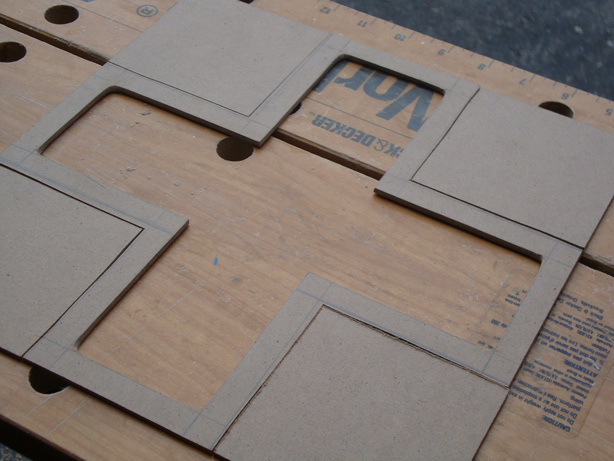
Here’s our progress all together!:

We’re hoping to post up our general step-by-step after the whole process is complete!
Building Two 5-Foot NES Controllers
We decided to build two 5-foot working NES controllers for very large competitive fun and the potential of four-person (2-player team) tournaments!
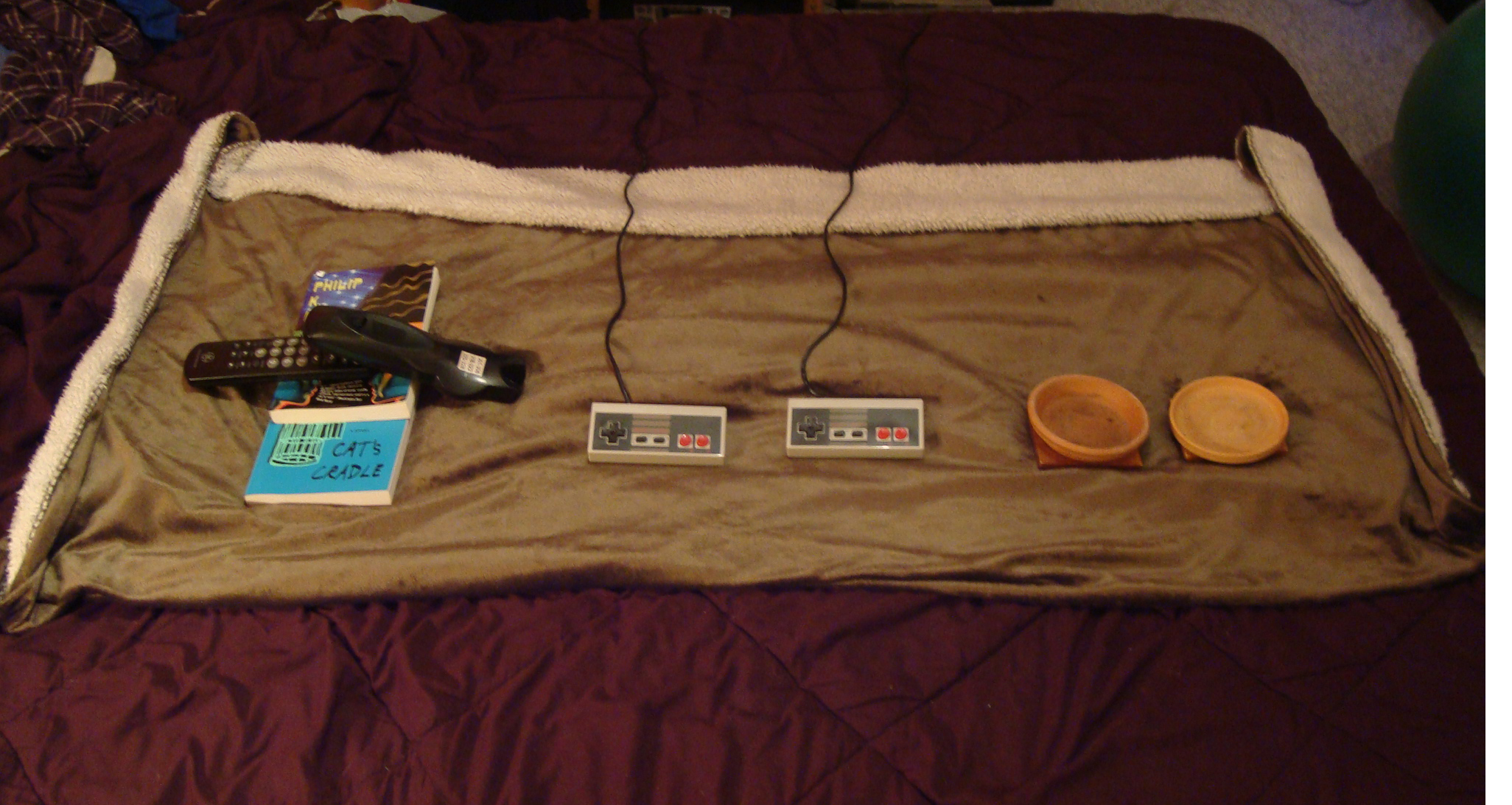
Here’s where we started, getting a feel for sizes:
Video Killed The Video Star
Video Killed the Video Star is a pop video-music piece that is an amalgamation of the first music video aired on MTV, Video Killed the Radio Star (1979), the film Sunset Boulevard (1950), AM radio samples, 80’s RCA television commercials, and 20 of Youtube’s most popular Internet memes. Video Killed the Video Star tracks the evolution of stardom through obsolescence and into contemporary media forms. All images are synced to their original audio sources, cut for cut, what you see is what you hear.
This piece was screened at the Museum of Contemporary Canadian Art for Videodrome 2012. Created by Daniele Hopkins and Kyle Duffield.
Video as a format is an affordable and democratizing media. Music videos replaced radio music by allowing the image of musicians to prevail. Video has replaced film because of its affordability and malleability. The Internet is replacing traditional means of broadcasting while providing opportunities for average users to reach previously inaccessible levels of popularity through services like Youtube. However, due to the accessibility of video production and distribution, there is an overwhelming volume of video content available on today’s Internet. Does this oversaturation of self broadcasting honour the creative potential of a larger global culture, or does it instead result in delusions of stardom and a diluting of quality?
Halloween Audio/Video Window Projection 2010
 Daniele Hopkins and Kyle Duffield